
Royalty Interests
A royalty interest is a cash-flow asset first, and we underwrite it the way you'd underwrite any income stream with a known depletion timeline.
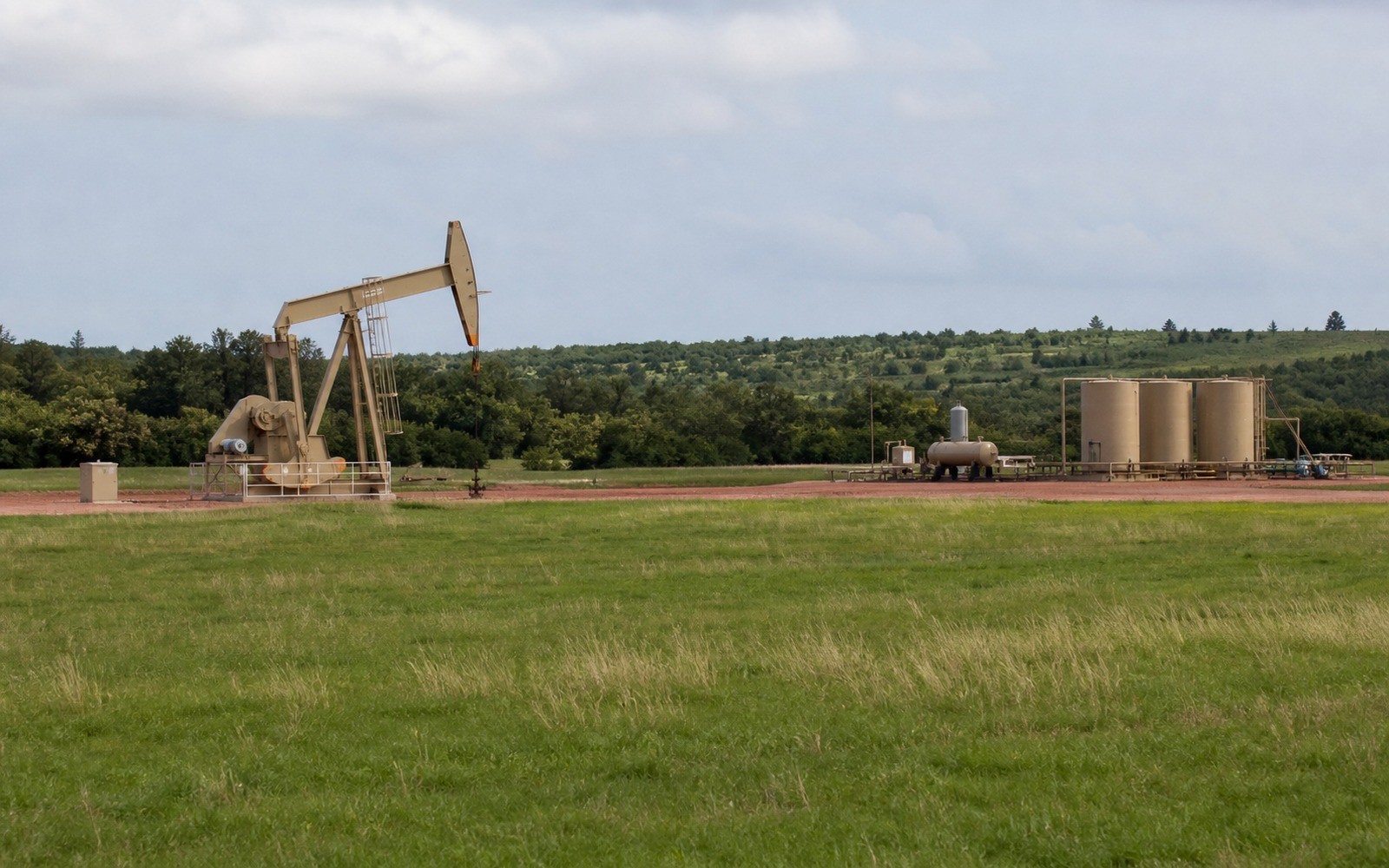
A royalty interest is the right to a share of oil or gas production, free of the costs of drilling and operating the well, typically arising from either a mineral owner's retained royalty under a lease or a separately created royalty carved out of a mineral estate. It's the most common thing that crosses our desk, because it's the most common thing people actually inherit or accumulate: a check that shows up monthly or quarterly, tied to a well most owners have never seen.
Because a royalty interest's value is almost entirely a function of remaining production and price, our underwriting here is more numbers-driven than almost anything else we do: we're building a decline curve, applying a discount rate, and being honest about where that curve is headed.
Reading a decline curve the way we do
Every producing well follows some version of a decline curve, and the shape of that curve depends heavily on the formation, the completion, and how long the well has been on production. A shale well typically shows a steep decline in its first one to three years before flattening into a long tail; a conventional or coalbed methane well often shows a gentler, more gradual decline over a longer period. We ask for as much trailing history as you have, because more data points let us fit a more accurate curve rather than guessing based on a handful of recent months.
We weight recent production heavily, since it's the most predictive of near-term behavior, but we also look at the shape of the curve over its full life to understand whether the well is still in early decline, mid-life, or approaching its economic limit.
What the deduction lines on your check actually mean
Most royalty statements list gross production, a price, one or more deductions for gathering, transportation, compression, or processing, and then net revenue. Those deductions can be a meaningful share of what you're actually paid, and they vary by basin and even by operator. We look at net revenue trends alongside gross volume, because a well with flat production but rising deductions is generating less royalty income over time even though the production number looks stable.
If your statement doesn't clearly break out these deductions, we'll request clarification from the operator or work from what documentation is available, but a detailed statement lets us underwrite faster and more accurately.
Royalty interest versus overriding royalty versus NPRI
A standard royalty interest arises from the mineral owner's own retained share under a lease they signed or inherited. An overriding royalty interest, or ORRI, is instead carved out of the working interest, typically created by an operator, landman, or intermediate party, and it terminates when the underlying lease terminates, which is a meaningful difference from a royalty tied to the mineral estate itself, which can survive lease expiration and be re-leased. A non-participating royalty is a third variation, carved from the mineral estate but stripped of executive rights.
We ask which type of instrument created your specific interest because it changes both how we value the remaining life and, in the case of an ORRI, what happens if the current lease is dropped or the well is plugged.
What speeds up a royalty interest sale
The fastest files have a current division order, at least a year of consistent statements, and a deed or instrument that clearly matches the current owner's name. Where an interest has passed through inheritance without formal probate, or where the division order references an outdated name or address, we handle that title work directly, but it does add time before we can close.
Questions Owners Ask the Acquisition Desk
How do you calculate an offer on my royalty interest?
We build a decline curve from your trailing production and net revenue history, project remaining well life, and apply a discount rate that reflects the time value and risk of that future income. We don't promise a specific multiple upfront without seeing your actual data.
Why did my royalty check drop even though the well is still producing?
It could be normal production decline, a drop in commodity price, or rising deductions for gathering or transportation. We look at all three separately rather than assuming one cause.
What's the difference between my royalty interest and an overriding royalty?
Your royalty interest is tied to the mineral estate and typically survives if the current lease ends, since the mineral owner can re-lease. An overriding royalty is carved from the working interest and expires when that specific lease ends.
Do you buy royalty interests in wells that are near the end of their productive life?
We do, priced conservatively against the limited remaining production. We're upfront when a well appears close to its economic limit rather than pricing it as if it has years of life left.
What if I only have a few months of check stubs?
We can still work with limited history, though more trailing data lets us fit a more reliable decline curve. We'll ask the operator for additional records where possible to fill gaps.
Want a range built from your statements, acreage, lease, activity, and ownership records?
Send the county and state, owner name, operator or payor, recent statement, deed reference, lease, division order, probate record, or written offer you have.